
A City of Contrasting Faces
Tehran, that bustling and complex metropolis, is a city whose every corner tells a story. From old alleys and vibrant bazaars to high-rise towers and crowded streets that host millions of people every day, the city is full of contrasts. Built against the Alborz mountain range, Tehran carries thousands of years of history and culture within it. Yet despite its scale and depth, a difficult truth emerges when people think about Tehran's image: this vast and fragmented city does not have a unified brand. It seems that everyone sees Tehran differently and forms a distinct image of it; an image that is not only contradictory but sometimes conflicting.
Within this disorder, Tehran has become a collection of scattered fragments rather than a city with a unified identity. Each fragment has its own story, and there appears to be no overarching plan for arranging them. A tourist may see Tehran as a city of traffic and smog, another resident may view it as a place of opportunities and dreams, while someone else may regard it as a city marked by inequality and insecurity. The media also approaches this puzzle from different angles; news about Tehran can sometimes be full of admiration and at other times filled with criticism.
This inconsistent situation has multiple causes. The absence of precise and integrated urban branding planning, the number of responsible institutions that sometimes move in conflicting directions, and the lack of a shared vision for Tehran's future have all prevented the capital from creating a coherent image in the minds of domestic and international audiences. Urban branding means creating a unified and understandable story about a city that can take root in the minds of all its audiences, but Tehran has not yet succeeded in this effort.
Alongside this shortcoming, major opportunities have also been lost. Tehran could have become a center for attracting tourists, investors, and artists; a city known not only for its historic buildings but also for its dynamic culture and diverse people. However, the absence of a clear brand identity has prevented these capacities from fully producing results. Whenever Tehran is introduced on the international stage, an ambiguous and sometimes negative image is presented. This is not only damaging to the urban economy but also has negative effects on citizens' perceptions of their city.
Ultimately, this report examines the reasons behind Tehran's failure in urban branding, from the conflict between parallel identities that sometimes appear contradictory to the absence of planning and strategic thinking in urban policies. The opportunity Tehran has lost may be one that will never return. Nevertheless, through determination and sound judgment, it is still possible to build a city that occupies a place in everyone's heart; a city that is Tehran, not merely a name but a living and coherent brand in the minds of all those who love it.
Urban Branding: A Concept Beyond Advertising
Urban branding is the process through which a city uses its unique characteristics to create a distinctive and positive image in the minds of its audiences. This image may include the city's history, culture, architecture, events, and residents' lifestyle. In many cities around the world, urban branding is used as a tool to attract tourists and investment and to improve residents' quality of life.
Tehran and the Challenges of Urban Branding
1. Conflicting Parallel Identities
Tehran is a city with multiple historical, cultural, and social layers. On one hand, the northern parts of the city are known for modern architecture and a Western-influenced lifestyle, while the central and southern areas are associated with traditional urban fabric and rich cultural heritage. Although this diversity could serve as a strength in urban branding, the absence of a clear strategy has turned it into a conflict between parallel identities.
2. The Absence of Urban Branding Planning
Studies show that urban branding has not been treated as a key component in Tehran's urban development plans. A study titled “The Position of Branding in Urban Development Plans: A Challenge Between the City's Inner Identity and External Life” emphasizes that attention to spatial, cultural-social, structural-identity, and economic factors can contribute to effective branding for Tehran. (civilica.com, isnac.ir)
3. Missed Tourism Opportunities
With its historical, cultural, and natural attractions, Tehran has significant potential to attract tourists. However, because of the absence of effective branding, this potential has not been fully realized. A study titled “Analysis of the Competitiveness of Iran's Metropolises from the Perspective of Urban Tourism” emphasizes that destination branding, promotion and marketing, identity, image, and destination awareness are key factors in attracting tourists. (journals.ui.ac.ir)
Urban Symbols: From Milad Tower to Tabiat Bridge
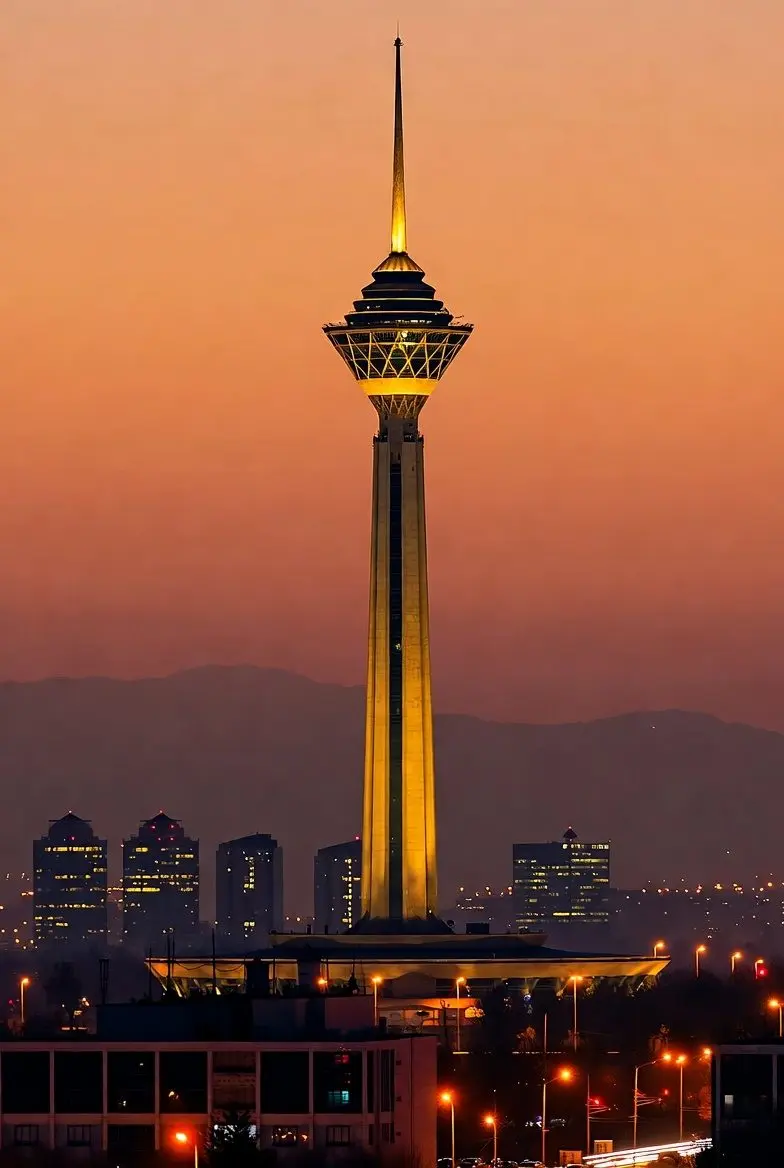
Milad Tower and Tabiat Bridge are recognized as modern symbols of Tehran. Although these structures could play an important role in urban branding, their lack of conceptual connection with the city's historical and cultural identity has prevented them from presenting a coherent image of Tehran. An article titled “Branding and the Prescriptive Identity of Tehran's Metropolitan Symbols” emphasizes that these symbols have been used more as advertising tools than as elements that shape identity. (nazaronline.ir)
Proposed Solutions for Effective Tehran Branding
1. Developing an Urban Branding Strategy
Tehran needs a comprehensive branding strategy developed with the participation of government institutions, the private sector, and civil society. This strategy should be based on a precise analysis of the city's strengths, weaknesses, opportunities, and threats.
2. Focusing on Historical and Cultural Identity
Tehran's branding should be grounded in the city's historical and cultural identity. Using historical symbols, cultural events, and residents' lifestyles can help create a coherent and distinctive image.
3. Involving Citizens in the Branding Process
Citizens play a key role in urban branding. Their active participation in designing and implementing branding strategies can create a stronger sense of belonging and reinforce urban identity.
4. Using New Technologies
Using new technologies such as virtual reality, mobile applications, and social networks can help promote Tehran's urban brand nationally and internationally.
Conclusion
The Need for Coherent Branding for Tehran
With all its capacities and potential, Tehran needs coherent and purposeful branding. Developing and implementing urban branding strategies can improve the city's image among residents, tourists, and investors while creating a foundation for sustainable development and a better quality of life in Iran's capital.