
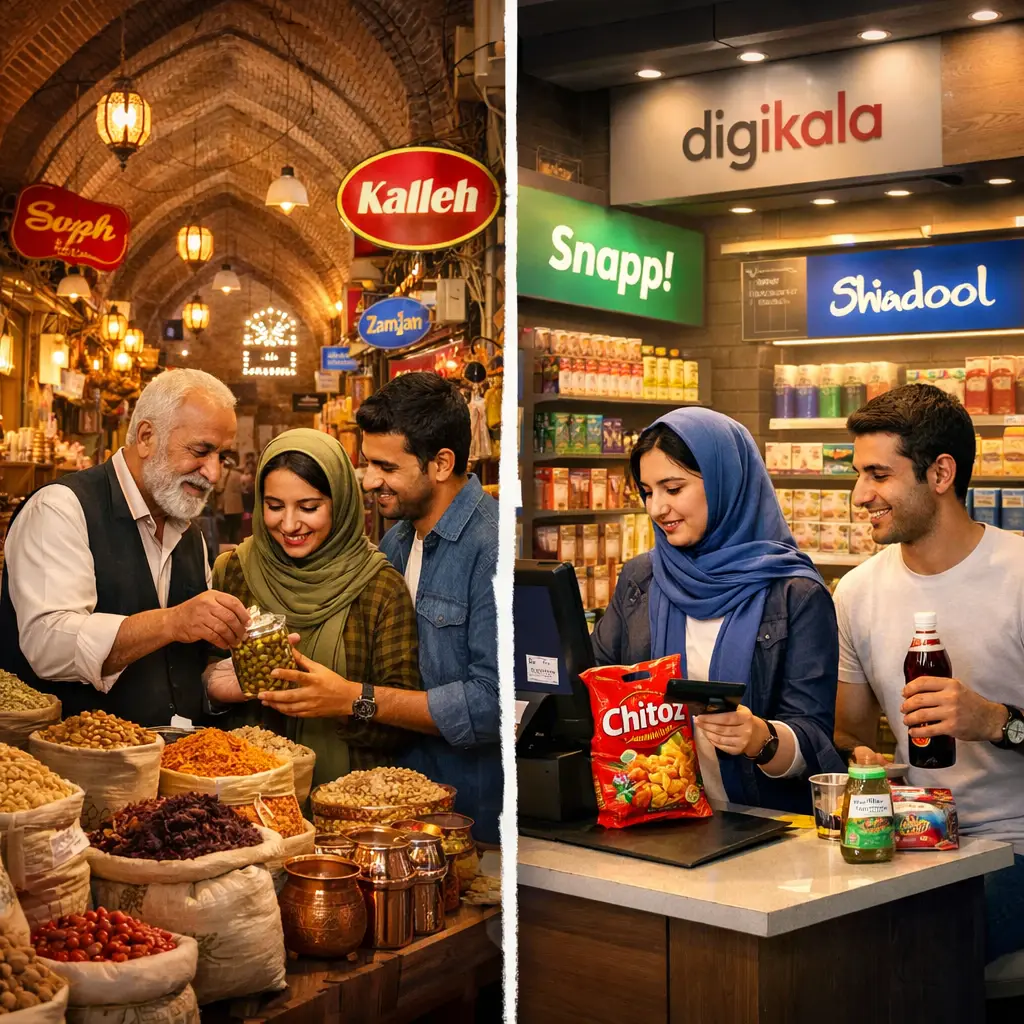
When Authenticity Replaces Billboards
In a world where advertising giants spend billions of tomans every day on billboards, sponsorships, and celebrity endorsements, there are still brands in Iran that have quietly taken a different path. Without glossy commercials and costly campaigns, these brands have earned a place in people's hearts and minds. “People-powered branding” is born precisely at this point: where brands introduce themselves not by repeating an empty slogan, but through an authentic, tangible, and likable experience. It is as though each of these commercial names carries a story that people have lived with, breathed with, and come to trust.
What Is People-Powered Branding? (The Brand as a Social Phenomenon)
In this quiet corner of the crowded advertising market, “people-powered branding” takes on meaning: a brand that speaks in the simple, sincere language of people rather than the heavy and artificial language of media. This form of branding grows from within society: from streets and marketplaces, from everyday conversations and needs, and from trust passed down across generations. Such brands do not surrender to the storm of large-scale advertising because their foundations rest on authenticity, honesty, and quality. Here, a brand is not merely a logo or elegant packaging; it is a collection of experiences and perceptions formed in the audience's mind. In “organic, people-powered branding,” the process is shaped from the bottom up, by consumers, rather than from the top down, by media. In a society where people often rely more on others' experiences because they distrust formal advertising, word-of-mouth marketing becomes the most powerful tool for growth.
3 Successful Examples of People-Powered Brands in Iran
This report tells the story of brands that have chosen quality and genuine connection over market noise. Below, we examine three notable examples:
1. Moslem Chelo Kababi: The Queue as a Symbol of Trust
In Tehran's Grand Bazaar, among its long-established shops, the name “Moslem” stands out. This restaurant has no television commercials, dedicated app, or chain branches. Yet its long lunchtime queues are evidence of the public's collective trust.
The secret to its success: consistent quality, professional staff conduct, fast service, and fair pricing. These are values embedded in the consumer's cultural memory, not in advertising commercials.
2. Kalleh: A Self-Made Brand from Amol to Europe
In the 1990s, when the dairy market was dominated by several state-owned brands, “Kalleh” changed Iranian consumer tastes through innovations such as strained yogurt and a diverse range of cheeses. Kalleh never relied on advertising as loudly as its competitors, but people experienced its quality and recommended it to others.
Achievement: inclusion among the world's 50 leading dairy brands in 2015 and exports to Europe were the result of domestic consumer loyalty, which became this brand's launchpad.
3. Mr. Dizi: A Chain That Began with Humor
When a brand name becomes linked with the public's playful tone, it is moving in the right direction. “Mr. Dizi” presented traditional food in a modern form while speaking in the familiar language of its customers.
Strategy: smart use of social media and humor. By sharing their photos with witty hashtags, users established this brand in the collective memory.
Key Success Factors in a People-Powered Branding Strategy
A review of the examples above shows that several critical factors contribute to the formation of these brands:
1. Consistently Positive Experiences: Brands that repeatedly deliver an excellent experience become memorable.
2. Empathy with People: Using popular language and culture creates a sense of closeness.
3. Transparency and Honesty: People are more likely to recommend brands that do not make them feel deceived.
4. Network-Based Management: The brand is advanced by loyal customers and bloggers, not only by public-relations managers.
Are People-Powered Brands Sustainable?
Contrary to common belief, brands built through a people-powered path are considerably more sustainable than advertising-led brands. The reason for this durability is “trust.”
In recent years, many high-spending brands in the food and clothing industries have experienced declining sales, while brands such as “Moslem” and “Kalleh” have continued their growth without a noticeable decline in popularity.
Risks and Challenges
Nevertheless, people-powered branding is not without challenges:
* Relying solely on loyalty without “innovation” is risky.
* A small mistake in the age of social media can undermine hard-earned trust.
* Smart competitors can capitalize on potential weaknesses.
A Brand Is Built, Not Bought
The stories we have read demonstrate that “a brand cannot be built unless people want it.” People-powered branding in Iran is not merely a technique; it is an art that rises from the heart of culture. By committing to consistent quality and creating a human experience, Iranian entrepreneurs can establish a strong position in the market, a position that no billion-toman billboard can buy.